Alex Hughes · 16 September 2026
Poland's Academic Honors Framework and Its Connection to Workforce Relocation in Prominent Economic Zones
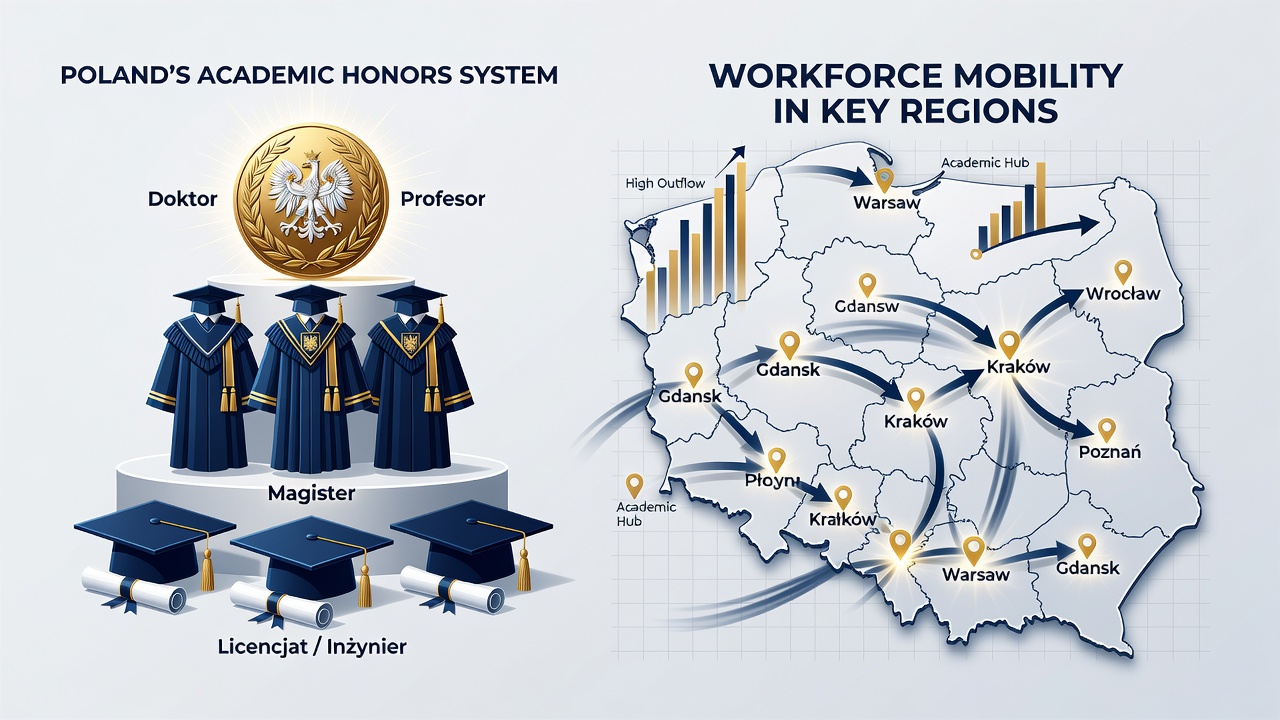
Poland maintains a structured system of academic honors that recognizes student achievement through distinctions such as cum laude equivalents, rector's awards, and ministerial scholarships, while patterns of workforce mobility show consistent flows toward major urban centers including Warsaw, Krakow, and the Tri-City area. These elements intersect as graduates with formal recognitions often pursue opportunities in regions that offer specialized employment sectors, and data from national statistics offices track these movements over multiple years.
Components of the Academic Honors System
Universities across Poland award honors based on grade point averages, research contributions, and extracurricular involvement, with the "z wyróżnieniem" designation appearing on diplomas for top performers who meet thresholds set by individual institutions. The Ministry of Science and Higher Education oversees national-level recognitions that include financial stipends and priority access to certain postgraduate programs, and observers note that these markers appear in employment records when companies review candidate profiles. Regional variations exist, since technical universities in Silesia emphasize project-based achievements whereas humanities-focused schools in Lublin highlight thesis quality and publication records.
Workforce Mobility Trends Across Regions
Internal migration statistics reveal that individuals aged 22 to 35 relocate from eastern and central rural districts toward western industrial zones and capital-region service hubs at rates that have remained steady since 2018. Employment agencies report higher placement success for candidates who hold documented academic distinctions, particularly in information technology clusters around Wroclaw and pharmaceutical sectors near Gdansk, where hiring managers cite preference for verified excellence indicators during screening processes. Figures from the Central Statistical Office indicate that net inflows to Mazowieckie province reached approximately 18,000 working-age adults in the most recent annual period, while outflows from Podlaskie and Lubelskie continued without significant reversal.
Links Between Honors and Regional Employment Shifts
Studies conducted by Polish labor research institutes demonstrate correlations between receipt of academic honors and selection of high-growth employment locations, although causation remains under examination. Graduates who earned ministerial scholarships show elevated rates of securing positions in multinational firms headquartered in Warsaw, and analysts attribute part of this pattern to expanded professional networks formed during award ceremonies and associated events. In September 2026, updated mobility datasets are scheduled for release that will incorporate post-pandemic adjustments and new visa policies affecting cross-border talent flows from neighboring countries.
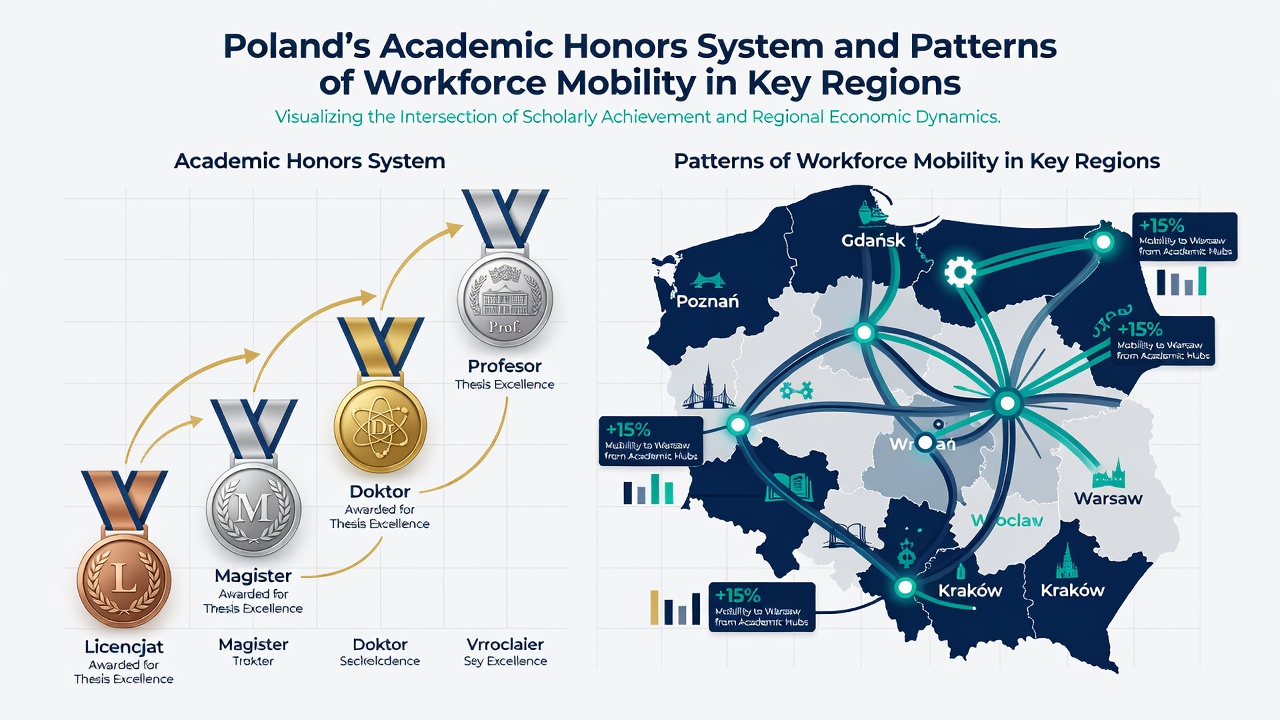
One longitudinal project tracked cohorts from 2015 through 2023 and found that 42 percent of honor recipients had changed provinces within five years of graduation, compared with 31 percent among peers without such distinctions. These movements concentrate in sectors requiring advanced qualifications, such as engineering consultancies in Katowice and financial services in Poznan, where employers maintain partnerships with specific universities known for rigorous honors tracks.
Regional Case Examples and Data Patterns
Observers examining Lesser Poland note that Krakow's technology parks attract a disproportionate share of graduates holding rector's awards from Jagiellonian University, while Greater Poland sees inflows tied to automotive and logistics roles that value documented research experience. In contrast, northern coastal regions experience seasonal fluctuations as tourism and maritime industries draw temporary workers, some of whom later transition to permanent positions after completing specialized certifications. European Commission reports on education-to-employment transitions highlight Poland's position among member states with moderate internal mobility rates, and OECD migration statistics provide comparative context showing how Poland's patterns differ from those in the Baltic states and central European neighbors.
Additional analysis from university career centers indicates that alumni with honors participate in relocation support programs at higher frequencies, often accessing housing subsidies and language training offered by regional development agencies in target cities. These supports appear most effective in areas designated as special economic zones, where tax incentives encourage companies to expand hiring.
Conclusion
Poland's academic honors system operates alongside measurable workforce mobility patterns that direct talent toward key economic regions, with available data showing measurable associations between formal recognitions and relocation choices. Continued monitoring through national and international sources will clarify how these dynamics evolve in response to policy changes and labor market demands.